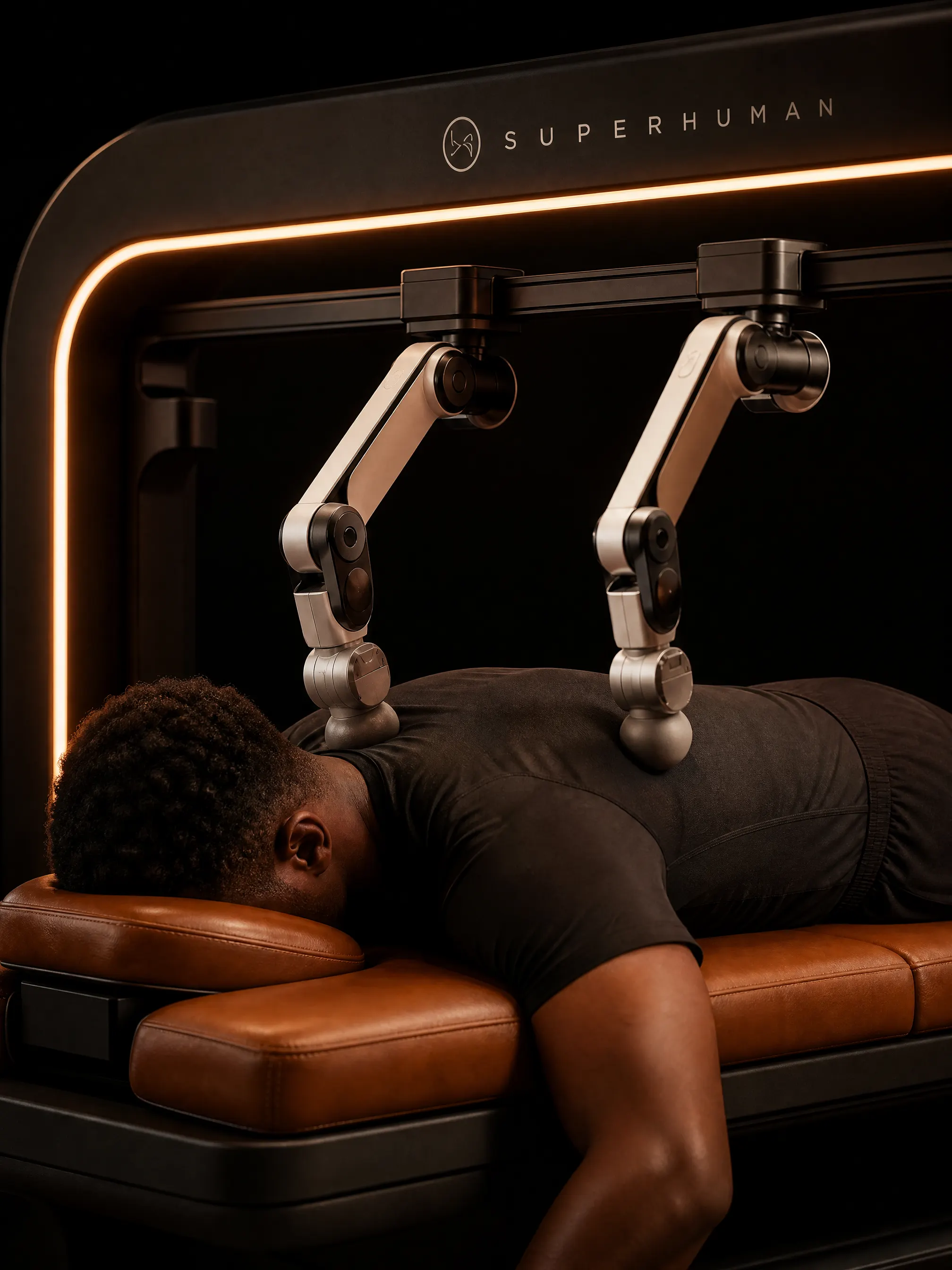
A massage robot is not a cheaper massage therapist. It is a different tool. A robot gives the same programmed session every time, at any hour, for a fixed monthly cost. A skilled therapist gives judgement, adaptation and care that no machine matches. The best fit for most businesses is both: therapists for the work only people can do, and a robot for the hours and capacity you cannot staff.
This page walks through the economics honestly. Where we use example numbers, we label them as illustrative.
What the data says about therapist pay
The US Bureau of Labor Statistics (BLS) publishes national wage data for massage therapists:
| Measure | Figure |
|---|---|
| Median annual wage (May 2025) | $58,450 |
| Median hourly wage | $28.10 |
| Lowest 10 percent earned less than | $33,640 |
| Highest 10 percent earned more than | $100,200 |
| Jobs in the US | About 155,400 |
| Projected growth, 2025–35 | 15 percent, much faster than average |
BLS also notes that part-time work is common, that schedules vary because therapists work by appointment, and that 36 percent of massage therapists are self-employed. Pay is often a mix of hourly wage, per-session commission and tips, so your actual cost depends on how you pay your team.
The growth figure matters. Demand for massage is rising faster than the average job market. When demand grows faster than the workforce, schedules at the edges of the day are usually the hardest to fill.
Two different cost shapes
The key difference is not the price. It is the shape of the cost.
- A therapist is mostly a variable cost. You pay for scheduled hours, plus employer costs such as payroll taxes and any benefits. If you schedule a therapist for a shift and only half the slots book, you still pay for the shift.
- A robot is a fixed cost. You pay the same each month whether it runs 20 sessions or 200. The more sessions you sell, the lower the cost per session.
The Superhuman Touch T1 costs $64,900, or about $1,350 per month financed over 60 months on approved credit. You own the machine. Electricity runs about $40 to $80 per month. A 2-year parts and labour warranty, remote monitoring and software updates are included.
Cost per session: illustrative math
Robot. Monthly cost: $1,350 financing + $60 electricity = $1,410.
| Sessions sold per month | Equipment cost per session |
|---|---|
| 30 (about 1 a day) | $47.00 |
| 60 (about 2 a day) | $23.50 |
| 120 (about 4 a day) | $11.75 |
| 180 (about 6 a day) | $7.83 |
| 240 (about 8 a day) | $5.88 |
Therapist. Illustrative labour cost per paid hour: $28.10 median wage + 20 percent overhead = about $33.70. If every paid hour is a booked 60-minute session, labour is about $33.70 per session. If only half of scheduled hours book, the labour cost per booked session doubles to about $67.40.
What the table shows:
- At low use, the robot is not cheaper. At one session a day, its cost per session is higher than a therapist’s hourly wage.
- At steady use, the robot costs far less per session. From about 2 to 3 sessions a day the robot’s fixed cost per session drops below the therapist’s labour cost.
- Utilisation decides the answer. Before you buy, estimate how many sessions you can really sell. Our ROI calculator helps with this.
These numbers do not include the front-desk time to check guests in, linens, or the space itself. Those apply to both options.
Hours coverage
Most massage demand clusters around evenings and weekends. Early mornings, late nights and mid-week afternoons are hard to staff, and many therapists reasonably do not want those shifts. Massage is also physically demanding work, and many therapists keep their hands-on hours below a full shift to protect their bodies.
A robot has none of those limits. The T1 runs about one guest per hour including changeover, with sessions of 30 to 60 minutes. It can run:
- Before the gym’s morning rush
- Late at night for hotel guests
- On public holidays
- In open slots when therapists are fully booked
Illustrative example: a gym open 5 am to 11 pm has 18 hours a day. A therapist on site from 4 pm to 9 pm covers 5 of them. A robot booked 6 times across the remaining 13 hours adds about 180 sessions a month that would otherwise not exist. Those are new sessions, not ones taken from the therapist.
What therapists do better
Be clear with your team and your guests about this. A skilled therapist:
- Assesses the person. They ask questions, notice posture, and adapt the session to how the client feels that day.
- Works on specific problems. Knots, trigger points, a stiff neck after travel. Programmed routines are general by design.
- Handles health conditions with care. Therapists know when to modify or avoid techniques, and when to refer a client to a physician. Robots are wellness devices, not medical tools.
- Works on areas a robot does not. The T1 covers back, shoulders, neck, glutes and legs. Therapists also work the face, scalp, hands, feet and more.
- Builds loyalty. Many clients return for a specific person. That relationship is valuable for your business.
- Offers modalities a robot cannot. Prenatal, sports, lymphatic, hot stone and many other specialised forms of massage depend on trained hands and judgement.
What robots do better
A robot is useful where consistency and availability matter most:
- The same session every time. A body scan and saved preferences repeat the routine booking after booking.
- Any hour. No shift limits, no fatigue, no sick days.
- Predictable cost. One fixed monthly amount.
- Privacy. Some guests prefer a session with no one else in the room. The guest stays clothed in fitted athletic wear.
- Scale at off-peak times. Add capacity without new hires for slots that would not fill a full shift.
How businesses combine both
Here are three practical patterns. They are illustrative examples, not reports from specific customers.
- Spa overflow. Therapists handle the booked menu. The robot takes walk-ins, short recovery sessions and slots that open when the therapist roster is full. See massage robots for spas.
- Gym recovery tier. The robot is part of a premium membership. A visiting therapist offers paid sports massage on set evenings. See massage robots for gyms.
- Hotel after hours. The spa’s therapists work daytime hours. The robot covers late check-ins and early departures. See massage robots for hotels.
In each case the robot adds hours and capacity. The therapists keep doing the work that needs people.
Talking to your team
If you add a robot, tell your therapists early and plainly. Explain which hours and services the robot will cover and which stay with them. Many therapists welcome a tool that takes the least popular shifts and lets them focus on the clients they want. One option is to offer the robot as a warm-up before a shorter, more focused therapist session.
Safety and health
The T1 has force limiting, a guest stop button within reach, collision detection and remote monitoring. It is a wellness device. We make no medical claims, and guests with injuries, pregnancy or health conditions should talk to their physician first. Compliance documentation is supplied with your written quote. More on the massage robot safety page.
Next steps
- Model your own numbers on the ROI page.
- See all costs, including site prep, on the massage robot cost page.
- Review the Superhuman Touch T1 specs and price.
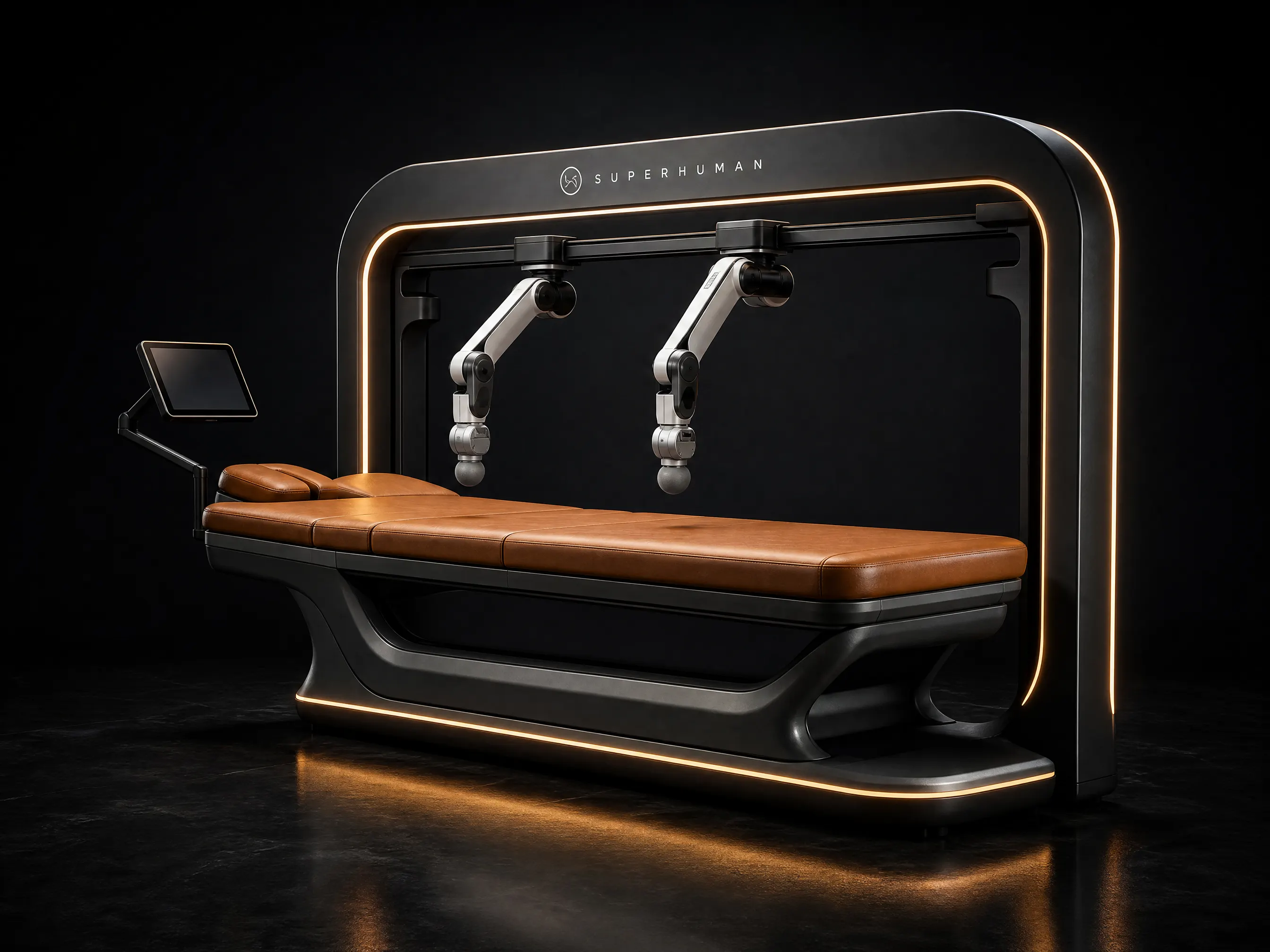
Superhuman Touch T1
A full-body massage that never calls in sick.
- Arms
- 2 robotic arms
- Session
- 30–60 min
- Guest
- Stays clothed
- Power
- 120/240 V · 20 A
Sources
- US Bureau of Labor Statistics, Occupational Outlook Handbook, Massage Therapists (pay, job count, outlook, work schedules): https://www.bls.gov/ooh/healthcare/massage-therapists.htm
- US Bureau of Labor Statistics, Occupational Employment and Wages, Massage Therapists (31-9011): https://www.bls.gov/oes/current/oes319011.htm