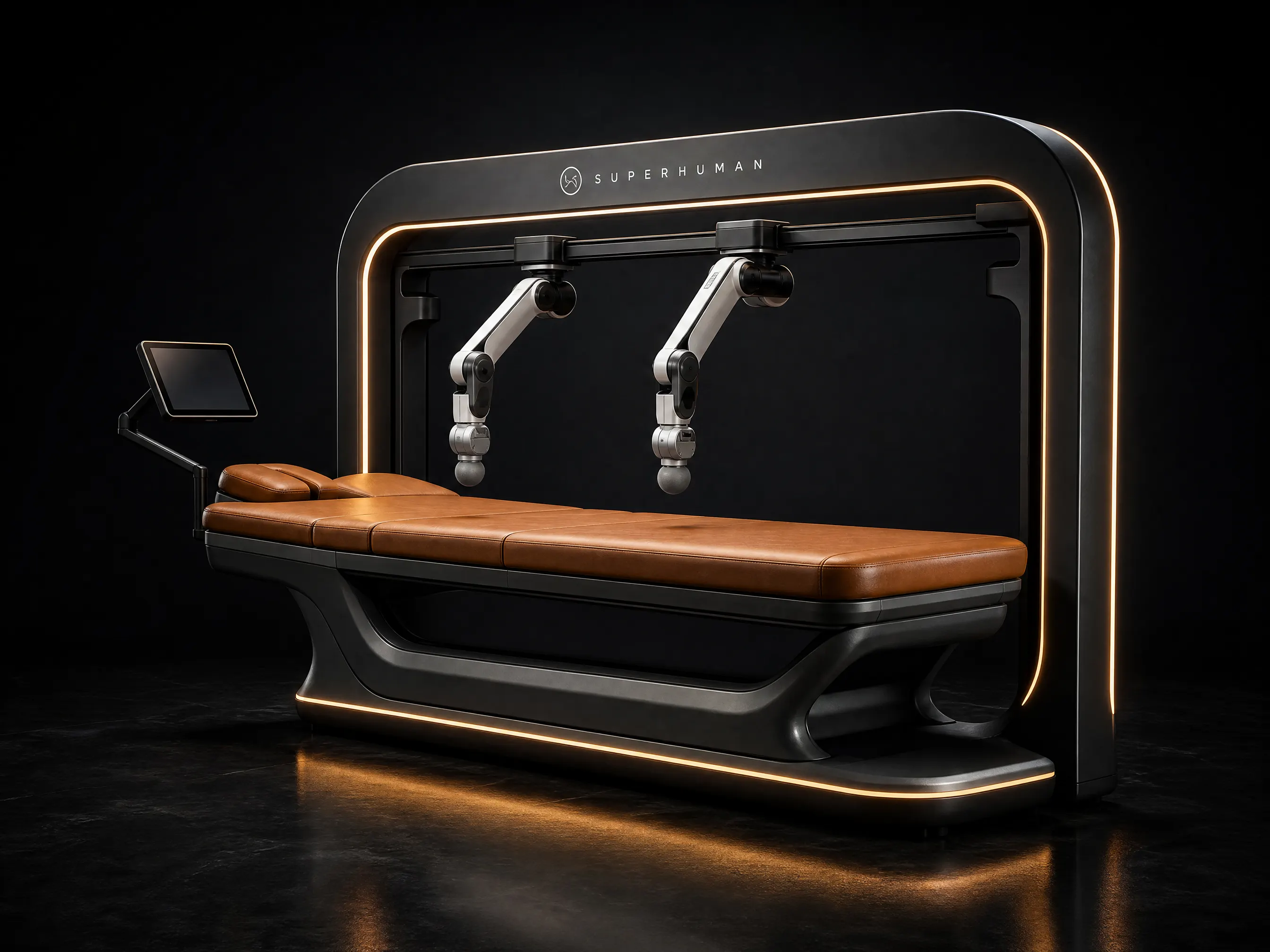
Massage robot ROI comes down to three numbers: what you charge per session, how many sessions you sell, and what the machine costs per month. At $60 a session and 6 sessions a day, a Superhuman Touch T1 brings in about $10,800 a month against about $1,630 in monthly costs. The examples on this page are illustrative. Use the calculator to run your own.
Revenue per session
Locations that run massage robots typically charge $60 or more per session. Your price depends on your market, session length and who your guests are.
| Session | Illustrative price |
|---|---|
| 30 minutes | $45–60 |
| 45 minutes | $60–80 |
| 60 minutes | $80–110 |
| Member rate | 15–30% off list |
A robot session usually sells for less than a therapist massage of the same length. That is fine. It is a different product, aimed at guests who want a quick, consistent session at a time that suits them.
Costs per month
These are the running costs for a T1. Your numbers may differ.
| Cost | Per month |
|---|---|
| Financing (60 months, OAC) | About $1,350 |
| Electricity | About $40–80 |
| Cleaning and supplies (illustrative) | About $150–250 |
| Front desk time for check-in (illustrative) | Covered by existing staff at most sites |
| Insurance increase (illustrative) | Ask your broker |
| Total (illustrative) | About $1,550–1,700 |
If you pay $64,900 outright, the financing line drops to zero and you track payback against the purchase price instead. Full cost details, including room prep and power, are on the massage robot cost page.
Utilisation scenarios
Utilisation is the share of open hours that you sell. The T1 does about 1 guest per hour including changeover. All figures below are illustrative, based on $60 per session and 30 open days a month.
| Scenario | Sessions per day | Sessions per month | Monthly revenue | Monthly costs | Monthly net |
|---|---|---|---|---|---|
| Slow start | 2 | 60 | $3,600 | $1,630 | $1,970 |
| Steady | 4 | 120 | $7,200 | $1,630 | $5,570 |
| Mid | 6 | 180 | $10,800 | $1,630 | $9,170 |
| Busy | 9 | 270 | $16,200 | $1,630 | $14,570 |
Revenue here is before payment processing fees and sales tax. If you run a revenue share with a booking platform, take that out too.
Most new sites start in the slow or steady band. Demand builds as members try it and come back. Plan your budget on the slow band, and treat anything above it as upside.
Break-even
Break-even is the number of sessions that covers your monthly costs.
Financed: $1,630 in monthly costs ÷ $60 per session = about 28 sessions a month. That is roughly one session a day.
Bought outright: $64,900 ÷ monthly net gives you payback in months.
| Scenario | Monthly net (no financing) | Payback on $64,900 |
|---|---|---|
| Slow start | $3,320 | About 20 months |
| Steady | $6,920 | About 9.4 months |
| Mid | $10,520 | About 6.2 months |
| Busy | $15,920 | About 4.1 months |
These figures use $280 a month for electricity, cleaning and supplies. They are illustrative and assume steady demand from the first month, which is rarely how it goes. Add a ramp-up period of two to four months to be safe.
Run your own numbers
- Monthly session revenue
- —
- Running cost per month
- —
- Other monthly costs
- —
- Monthly profit before financing
- —
- robot price
- —
Rough guide only: before tax and financing. Running cost reflects typical monthly power use.
Try a lower price and fewer sessions than you expect. If the numbers still work, the business case is solid.
Five-year view
Payback is only part of the story. A machine you own keeps earning after it is paid off. Here is an illustrative five-year view for a financed T1 in the steady scenario, 4 sessions a day at $60.
| Period | Revenue | Costs | Net |
|---|---|---|---|
| Months 1–3 (ramp-up, 2 a day) | $10,800 | $4,890 | $5,910 |
| Months 4–12 (4 a day) | $64,800 | $14,670 | $50,130 |
| Years 2–5 (4 a day) | $345,600 | $78,240 | $267,360 |
| Five-year total | $421,200 | $97,800 | $323,400 |
Costs here are $1,630 a month: financing plus electricity, cleaning and supplies. They leave out staff time, card fees, rent and any service plan after the 2-year warranty. Add those for your site. At the end of month 60 the loan is paid and you own the machine.
The same five years on a market lease from about $2,700 a month would cost roughly $81,000 more in payments, and the machine would go back at the end.
Revenue beyond the session
Session fees are the direct return. Many sites see value in other places too. Count these only if you can measure them.
- Memberships. A robot session can be a reason to upgrade to a higher tier. Track upgrades that include it.
- Retention. Recovery services give members another reason to visit. Compare churn for members who use it and members who do not.
- Room rates. Hotels can bundle a session into packages or wellness rates.
- Therapist bookings. Some guests who try the robot go on to book a therapist for deeper work. That is revenue a robot sends to your team, not away from it.
Staffing cost comparison
This section is about capacity, not about replacing people. Skilled massage therapists do work that a robot cannot, and good ones are hard to find. Many spas and gyms already turn away bookings in early mornings, late evenings and weekends because they cannot staff those hours.
A robot can cover those gaps. Here is an illustrative comparison of what it costs to add one more bookable hour.
| Added therapist hours | Massage robot | |
|---|---|---|
| Cost driver | Wages, commission, payroll taxes, benefits | Financing, power, cleaning |
| Illustrative cost per hour sold | $35–55 | About $9 at 180 sessions/month |
| Available hours | Limited by hiring and scheduling | Any hour you are open |
| Consistency | Varies by therapist | Same routine every time |
| Range of work | Full skill set, assessment, judgment | Programmed routines only |
The therapist figure is an illustrative range for wages plus commission and payroll costs in many US markets. It varies a lot by city and pay model. The robot figure is $1,630 divided by 180 sessions.
The best setups use both. Therapists handle the guests who need a skilled, hands-on session. The robot handles quick recovery sessions and the hours nobody wants to work. For a fuller look, read massage robot vs massage therapist.
How to improve ROI
- Sell it in the right hours. Early morning, lunch, and late evening are when therapists are scarce and guests have time.
- Bundle it. Add a session to memberships, recovery packages or hotel room rates.
- Keep sessions short. 30-minute sessions mean more guests per day and a lower price that is easier to say yes to.
- Cut changeover time. A clean, simple room and a fast wipe-down routine keep you near 1 guest per hour.
- Track it. Use the operator dashboard to see which hours sell and price accordingly.
What can hurt ROI
Be honest about the risks:
- Low demand. If your guests do not want it, utilisation stays low. Run a trial offer before you count on revenue.
- Room cost. If the robot takes a room that already earns money, count that lost revenue.
- Downtime. A machine that is down does not earn. Check the warranty, response times and the service plan. The T1 includes a 2-year parts and labour warranty and remote monitoring.
- Vendor support. You need software updates and parts for years. Ask any vendor about funding and long-term support.
The T1 is a wellness device. We make no medical claims, and guests with health conditions should consult a physician first.
Next steps
See the full spec on the T1 product page, check terms on the financing page, or compare options on the massage robots for sale page. When you are ready, contact us for a written quote and a site spec.