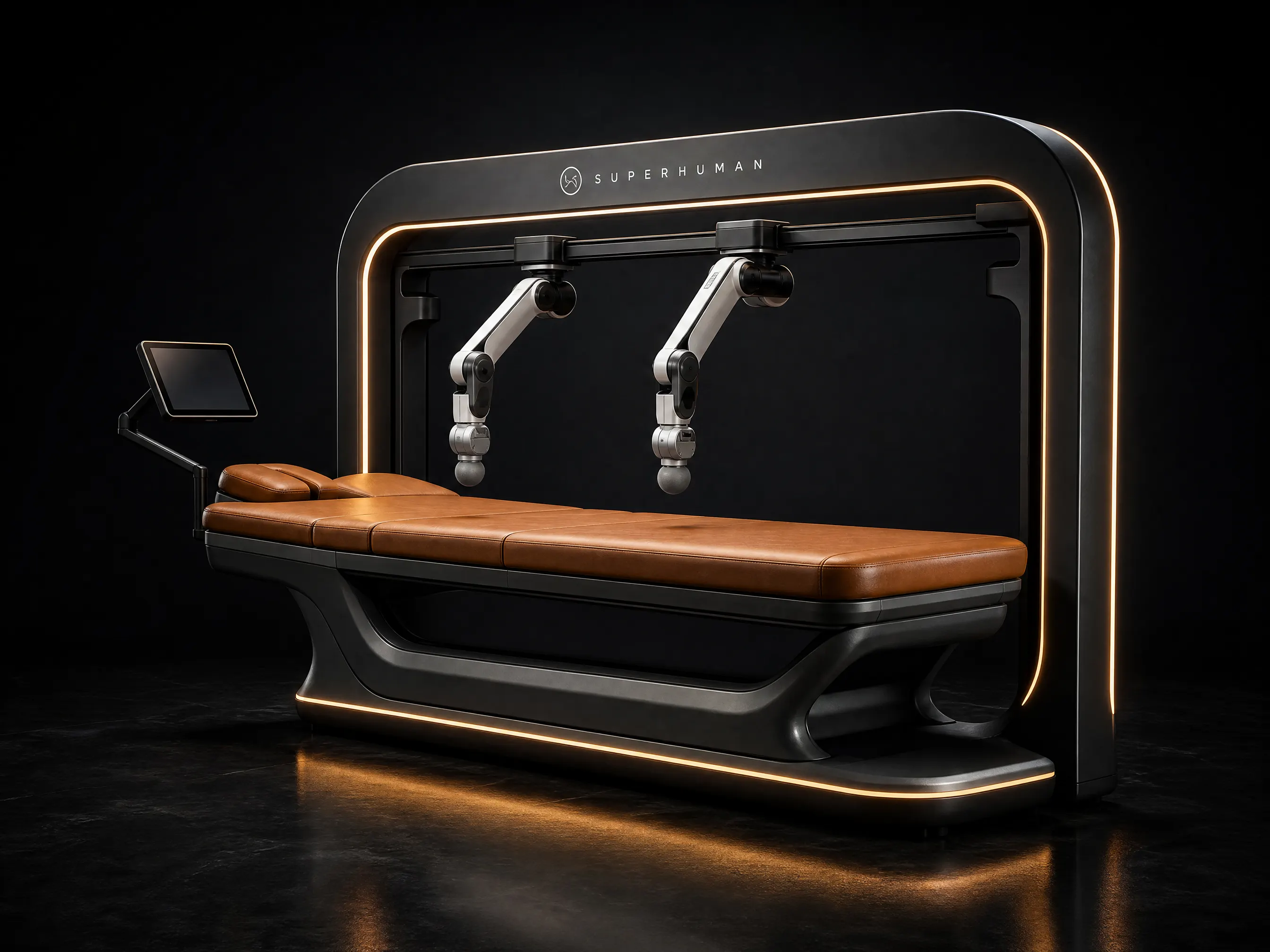
A commercial massage robot costs between about $13,000 and $150,000. Entry systems run $13–23k, mid-range dual-arm robots about $60k, and flagship systems $125–150k. The Superhuman Touch T1 is $64,900, or about $1,350 a month financed, and you own it.
The sticker is only part of the bill. Below we cover what drives price, the costs that come after, and how buying compares with leasing.
Massage robot price tiers
These are typical prices across the market in 2026. Vendors may quote differently for your site.
| Tier | Typical price | Arms | What you usually get |
|---|---|---|---|
| Entry | $13,000–23,000 | Often one | Smaller frame, fewer routines, simpler body mapping |
| Mid | Around $60,000 | Two | Full-body table, 3D body scan, programmable routines |
| Flagship | $125,000–150,000 | Two | Larger software platform, often a yearly platform fee |
| Market lease | From about $2,700/mo | Varies | Use of the machine, no ownership |
| Superhuman Touch T1 | $64,900 | Two | 3D scan, guest-set pressure, install, training, 2-year warranty |
For reference, one flagship vendor lists its device “from $125,000,” a $10,000 per year service and support fee, and financing at roughly $3,000 a month. See Sources below.
What drives the price of a massage robot
Five things move a robot from one tier to the next.
- Number of arms. Two arms work both sides of the body at once. That means more motors, more sensors and a stronger frame.
- Body mapping. A 3D scan before each session lets the robot fit the routine to each guest. Cheaper systems use fixed paths or simple presets.
- Force control and safety. Force limiting, collision detection and a guest stop button cost money to engineer and test. They are not optional in a commercial setting.
- Software. Routine libraries, guest profiles, booking links and an operator dashboard all take ongoing work. Some vendors charge for this every year.
- Service and install. Delivery, calibration, training and warranty length vary a lot. A low price with no install or a 90-day warranty is not a low price.
What the T1 price includes
Financing is about $1,350 a month for 60 months, on approved credit. Full details are on the financing page and the service and warranty page.
Hidden costs to plan for
These costs apply to any massage robot, not just ours. Plan for them before you sign.
| Cost | What to expect | T1 notes |
|---|---|---|
| Room | A private, quiet room. Paint, lighting, a hook for bags, maybe a door lock | Footprint 2.4 × 1.6 m, recommended room 3.0 × 2.6 m |
| Power | A dedicated circuit, often an electrician visit | 120 V or 240 V on a dedicated 20 A circuit |
| Electricity | Monthly running cost | About $40–80 a month |
| Network | Stable Wi-Fi or Ethernet for updates, booking and remote support | Wi-Fi or Ethernet |
| Cleaning | Wipe-down of the table and face cradle between guests, plus supplies | Build 5–10 minutes into each hour |
| Insurance | Add the machine to your property policy and confirm general liability | Ask your broker; we supply documentation |
| Service plan | Coverage after the warranty ends | 2-year warranty included; optional plan after |
| Staff time | Check-in, start the session, reset the room | No therapist in the room during the session |
Most sites spend a few thousand dollars on room prep and electrical work. If you already have an empty treatment room with a spare circuit, it can be close to zero.
Buy vs lease
Leasing and buying both have a place. Here is a straight comparison over five years, using market numbers.
| Market lease | T1 financed | T1 outright | |
|---|---|---|---|
| Monthly payment | From about $2,700 | About $1,350 (60 mo, OAC) | $0 |
| Paid over 60 months | About $162,000 | About $81,000 | $64,900 up front |
| Own the machine at the end | No | Yes | Yes |
| Yearly platform fee | Varies | None | None |
The lease figure is a market starting point, not a quote from any single vendor. Lease terms differ, and some include service. Read the contract line by line.
The main case for a lease is low commitment if you are unsure about demand. The main case for buying is cost: at market lease rates, you would pay roughly twice as much over five years and still hand the machine back.
Return on investment, in short
A massage robot pays back through sessions sold. Locations that run robots typically charge $60 or more per session.
Illustration only, not a forecast:
- Price per session: $60
- Sessions per day: 6
- Days open per month: 30
- Monthly session revenue: $10,800
- Monthly costs: about $1,350 financing + $80 electricity + $200 cleaning and supplies = $1,630
At those numbers, the T1 covers its monthly costs with about 28 sessions a month, roughly one a day. Your results depend on pricing, demand and how you market it. Run your own numbers on the massage robot ROI page.
Cost per session over the life of the machine
Another way to judge price is cost per session. Spread the purchase price over the sessions the machine will deliver, then add running costs.
Here is an illustrative example for a T1 bought outright:
- Purchase price: $64,900
- Planned life for this example: 5 years
- Sessions per day: 6, open 360 days a year
- Total sessions over 5 years: about 10,800
- Hardware cost per session: about $6
- Electricity, cleaning and supplies per session: about $1.50
At $60 a session, that leaves most of the price as margin before staff time, card fees and rent. At half the sessions, the hardware cost per session doubles to about $12. That is still low against a $60 ticket.
Compare that with a flagship at $125,000 plus a $10,000 yearly fee. Over the same 5 years and 10,800 sessions, hardware and fees come to about $16 per session. The gap matters most at sites with modest demand.
Questions to ask any vendor about cost
Price sheets differ a lot. Ask every vendor these questions in writing:
- Is the listed price for the machine only, or installed and calibrated?
- Is there a yearly platform, software or content fee? Is it required?
- Do you take a share of session revenue?
- How long is the warranty, and does it cover labour as well as parts?
- What does a service plan cost after the warranty?
- Who pays for freight, and is there a setup or training fee?
- Is this a purchase, a loan or a lease? Who owns the machine at the end?
A low sticker with a yearly fee and a revenue share can cost more than a higher sticker with none. Add it all up over five years before you compare.
How to get an accurate quote
Send us three things and we will return a written quote with a site spec:
- The room size and a photo.
- Your panel location and whether a 20 A circuit is free.
- Your business type and expected hours.
The quote includes delivery, install, training and the compliance documentation for your location. The T1 is a wellness device. We make no medical claims, and guests with health conditions should consult a physician.
Compare models on the massage robots for sale page, read about business requirements in commercial massage robot, or contact us.
Sources
- Aescape pricing page (accessed October 2, 2026): https://www.aescape.com/pricing
- The Robot Report, “5 lessons for robotics entrepreneurs from Aescape’s business model pivot” (May 15, 2026): https://www.therobotreport.com/5-lessons-robotics-entrepreneurs-from-aescapes-business-model-pivot/