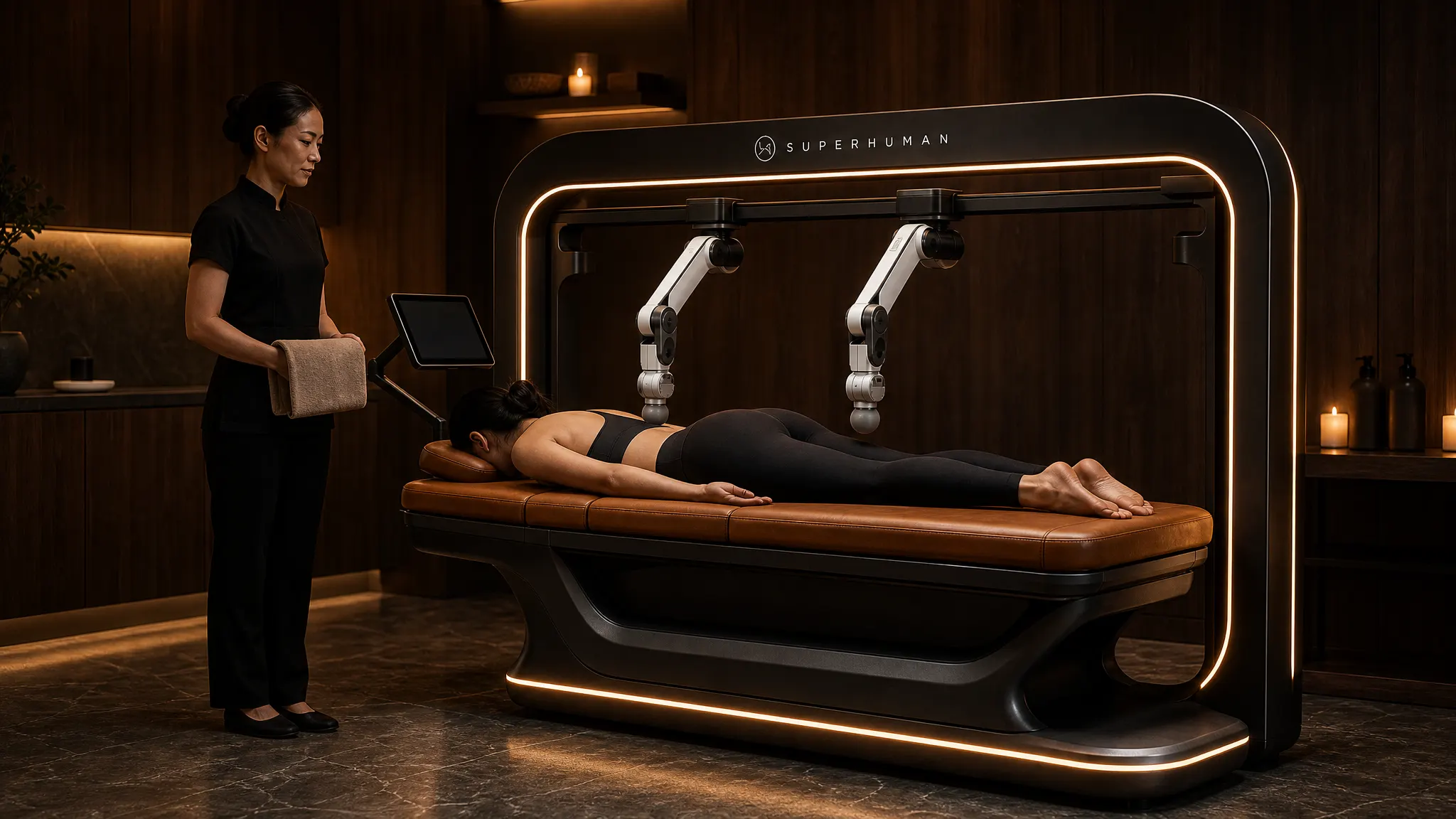
A massage robot helps a day spa sell the hours it cannot staff. It runs a consistent 30 to 60 minute clothed massage with no therapist in the room, so early mornings, late evenings and busy weekends stop being lost revenue. The Superhuman Touch T1 costs $64,900 or about $1,350 a month on financing, and you own it.
The capacity problem in most spas
Spa owners know the pattern. Demand peaks on evenings and weekends. Those are the shifts that are hardest to fill and easiest to lose staff over. Weekday mornings are slow, so you cannot justify a full roster then either.
The result is a calendar with gaps in the slow hours and a waitlist in the busy ones. Hiring more therapists is the obvious fix, but skilled therapists are hard to find and should be booked where their skill matters most.
A robot does not fix staffing. It adds capacity in a different shape: one room that can take a booking any hour the spa is open.
Covering the hours therapists can’t
The best use of a robot is in the hours that are hardest to staff:
- Before opening and after the last therapist leaves. Early risers and after-work guests can still book.
- Weekend overflow. When every therapist is booked, the robot gives the next guest a real option instead of a “sorry, we’re full”.
- Short-notice bookings. A guest who calls an hour ahead can usually get a robot slot.
- Quiet weekday hours. Offer a lower rate to fill time that would otherwise sit empty.
Plan on about one guest per hour including changeover. A spa open 12 hours a day has up to 12 robot slots a day without adding a single shift.
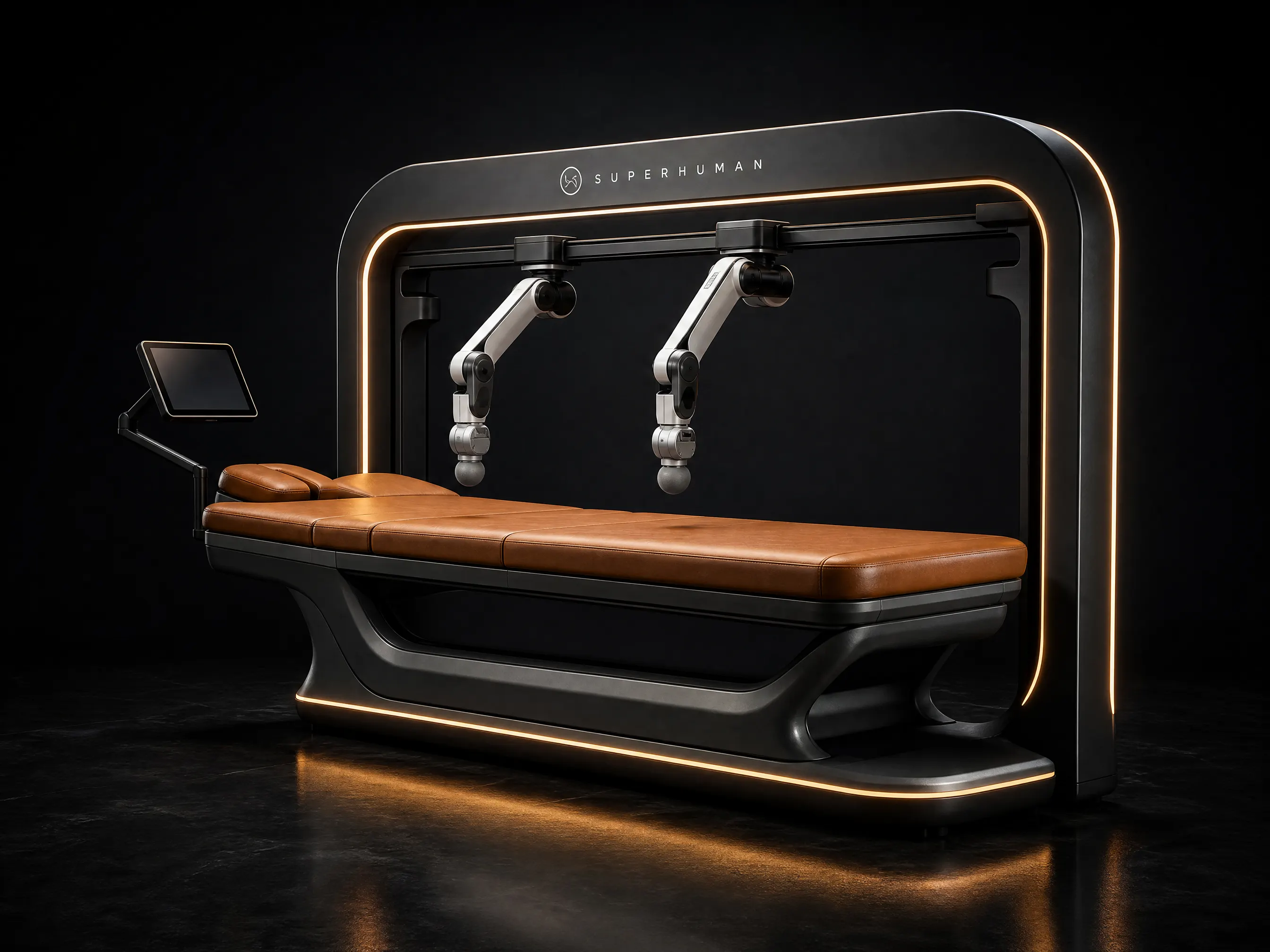
Superhuman Touch T1
A full-body massage that never calls in sick.
- Arms
- 2 robotic arms
- Session
- 30–60 min
- Guest
- Stays clothed
- Power
- 120/240 V · 20 A
Designing the menu: robot sessions vs hands-on
Keep the robot a clearly separate service. Guests should know what they are buying, and your therapist services should keep their premium.
| Robot session | Hands-on massage | |
|---|---|---|
| Who delivers it | Superhuman Touch T1 | Licensed therapist |
| Clothing | Fitted athletic wear | Usually undressed, draped |
| Length | 30, 45 or 60 min | Your standard menu |
| Customization | 3D body scan, guest sets pressure, saved preferences | Full assessment, any technique, real-time judgment |
| Availability | Any open hour | Therapist schedule |
| Price position | Entry or mid price | Premium |
A few menu ideas that work:
- “Express Recovery” 30 minutes. A short, lower-priced robot session for walk-ins and first-timers.
- Robot add-on before a facial or body treatment. A 30-minute session while a room turns over.
- Robot memberships. Monthly packs of 4 robot sessions, with a discount on hands-on bookings.
- Couples option. One guest on the robot, one with a therapist, at the same time.
Be clear in your descriptions. Say “robotic massage, clothed” so guests are not surprised.
How to position the robot with your staff
Introduce the robot to your team before your guests see it. Therapists may worry that it is meant to replace them. Be direct about what it is for.
- Explain the goal. It covers hours and bookings you are losing today. It is not a plan to cut therapist work.
- Show the numbers. If the robot fills empty slots, the spa grows. Therapist hours can stay where demand is strongest.
- Give therapists a role. They can recommend the robot to guests between appointments and suggest hands-on work for needs the robot cannot meet.
- Keep the skilled work with people. Deep assessment, prenatal massage, specific complaints and anything that needs judgment belong with a therapist.
For a fair look at both sides, read massage robot vs massage therapist.
Running the robot room
The T1 needs a private, quiet room of about 3.0 x 2.6 m, a dedicated 120 V or 240 V circuit on a 20 A breaker, and Wi-Fi or Ethernet. Guests use a touchscreen to set pressure and can stop the session at any time with a button within reach. Staff check guests in, start the session, clean the table between guests and stay on call.
Before each first session, ask the same health screening questions you ask for any massage. Guests with health conditions should check with their physician first. See our safety guide for a simple screening list.
Delivery, installation, calibration, one day of staff training, a 2-year parts and labour warranty, remote monitoring and software updates are included.
Illustrative economics
Assume a spa open 12 hours a day, 30 days a month, with robot sessions priced at $65 for 45 minutes.
| Line | Quiet month | Busy month |
|---|---|---|
| Robot sessions per day | 3 | 7 |
| Sessions per month | 90 | 210 |
| Revenue at $65 | $5,850 | $13,650 |
| Financing (60 mo, OAC) | -$1,350 | -$1,350 |
| Electricity | -$40 | -$80 |
| Laundry, supplies, card fees (estimate) | -$300 | -$700 |
| Monthly contribution before staff time and tax | $4,160 | $11,520 |
For comparison, a hands-on massage at the same price also carries therapist pay. The robot does not remove that work. It adds bookings in hours where you had none. Read massage robot cost for purchase, financing and running costs in full.
Getting started
Start with one robot in one room. Watch which hours fill, adjust prices and menu names, then decide whether to expand. More Superhuman models are on the way.
See the full T1 product page, compare financing, or contact us for a written quote and room check.