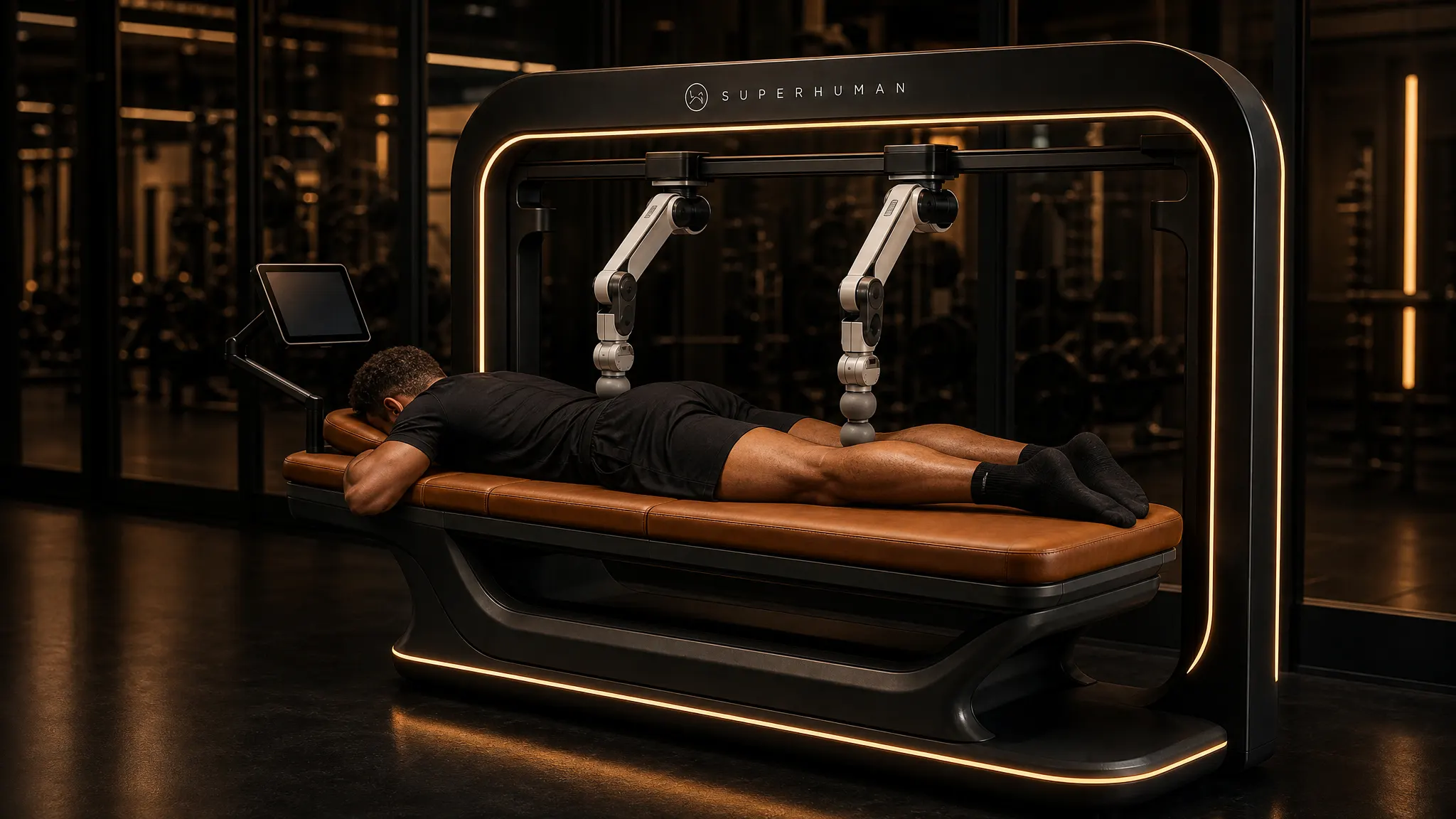
A massage robot in a gym is a recovery add-on members book like a class. It runs whenever the gym is open, needs no therapist in the room, and fits in a 3.0 x 2.6 m space. The Superhuman Touch T1 costs $64,900, or about $1,350 a month on financing, and you own the machine.
Why recovery is the easiest upsell in a gym
Members already pay for training. Recovery is the next thing they ask about. Many gyms try to meet that demand with stretching zones, foam rollers or a visiting therapist two evenings a week. The first two are free and hard to charge for. The third is hard to staff.
A massage robot sits in between. It is a paid, bookable service with a clear session length and a clear price. Members understand it right away: lie down, set the pressure, get a 30 to 60 minute massage on the back, shoulders, neck, glutes and legs.
It also gives your front desk something new to sell at the moment members are most likely to buy: right after a hard session.
How the T1 works in a gym setting
The member arrives, checks in at the front desk and walks to the robot room. They lie on the padded table in their gym clothes. The robot runs a 3D body scan, fits the routine to their body, and starts. The member sets and changes the pressure on a touchscreen. A stop button stays within reach the whole time.
Staff do not need to stay in the room. They start the session, wipe down the table between guests and are on call if the member needs help. You can read more in how massage robots work and our safety guide.
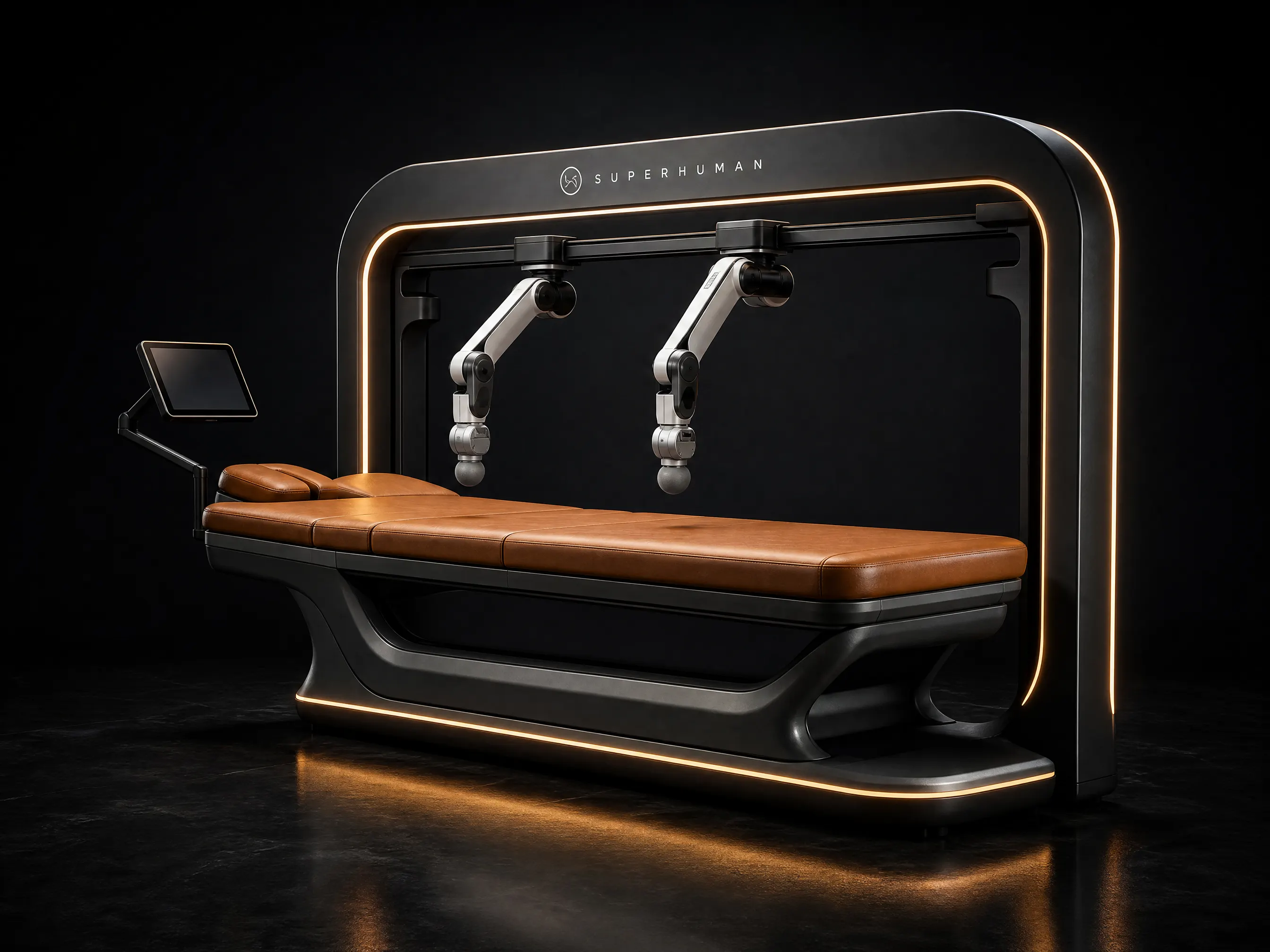
Superhuman Touch T1
A full-body massage that never calls in sick.
- Arms
- 2 robotic arms
- Session
- 30–60 min
- Guest
- Stays clothed
- Power
- 120/240 V · 20 A
Booking around peak hours
Gyms have two rush windows: early morning and after work. Those are also the hours members most want recovery, and the hours a human therapist is hardest to schedule.
A few booking rules that work well:
- Sell 30-minute slots at peak. Shorter slots move more members through the room when demand is high. Plan on about one guest per hour including changeover.
- Offer 45 to 60 minute sessions off-peak. Mid-morning and early afternoon are quieter. Longer sessions at a slightly lower per-minute price fill those hours.
- Put the robot in your booking app. Treat it like a class with one spot. Members book, pay and get a reminder.
- Hold one slot a day for trials. A free or discounted first session is the fastest way to turn a curious member into a paying one.
Membership tiers and pricing ideas
There are three common ways to charge. Many gyms use a mix.
| Model | How it works | Best for |
|---|---|---|
| Pay per session | Member add-on, for example $35 to $55 for 30 minutes | Testing demand, lower-tier members |
| Session packs | 5 or 10 sessions at a discount, prepaid | Regular users, steady cash up front |
| Included in top tier | 2 to 4 sessions a month built into a premium membership | Raising average membership value |
Location-based robot massage elsewhere in the market is often priced at $60 or more per session. Gym members expect a member price, so most gyms set the add-on below that and use the premium tier to lift revenue. These figures are starting points, not guarantees. Test them with your own members.
Planning the room
The T1 needs less space than most people expect, but the room matters for the experience.
- Size. Footprint is 2.4 x 1.6 m. Recommended room is 3.0 x 2.6 m so staff can clean around the table.
- Privacy and quiet. Use a room with a door, away from the weights floor and the music system. A converted office or treatment room works well.
- Power. A dedicated 120 V or 240 V circuit on a 20 A breaker. Ask your electrician early.
- Network. Wi-Fi or Ethernet for software updates, booking and remote support.
- Lighting and temperature. Dimmable light and a steady, slightly warm room make a big difference to how members rate the session.
Delivery, installation, calibration and one day of staff training are included in the price. See service and warranty for what happens after install.
Illustrative economics
Assume a gym open 16 hours a day, a $45 add-on price for 30 minutes, and the T1 on financing.
| Line | Low use | Steady use |
|---|---|---|
| Sessions per day | 4 | 8 |
| Sessions per month (30 days) | 120 | 240 |
| Revenue at $45 | $5,400 | $10,800 |
| Financing (60 mo, OAC) | -$1,350 | -$1,350 |
| Electricity | -$40 | -$80 |
| Cleaning supplies and linens (estimate) | -$100 | -$200 |
| Monthly contribution before staff time and tax | $3,910 | $9,170 |
At 4 sessions a day the machine covers its financing payment in about a week of bookings each month. If you buy outright, the same contribution pays back the $64,900 price in roughly 7 to 17 months in this example. Your own result depends on member count, price and how well the room is marketed. For a full breakdown of purchase, lease and running costs, read massage robot cost.
How to launch it to members
- Soft launch to your most active members. They talk. Give them a free first session and ask for honest feedback.
- Train front-desk staff to offer it. One line at check-out works: “There is a robot massage slot open at 7. Want it?”
- Show it, do not just list it. A short video of the robot at work on social media and a sign outside the room do more than a line on the price board.
- Track bookings weekly. Watch which hours fill and move prices to match.
Robot and human therapists can work together
If you already work with a massage therapist, the robot does not need to replace that service. Many members will still want hands-on work for specific issues. The robot covers the early, late and weekend hours that are hard to staff, and gives members an easy entry point. Some will move up to a therapist session later. Our robot vs therapist guide covers this in detail.
Next steps
Read the full T1 product page for specs and what is included, check financing options, or contact us for a written quote and a site check for your room.