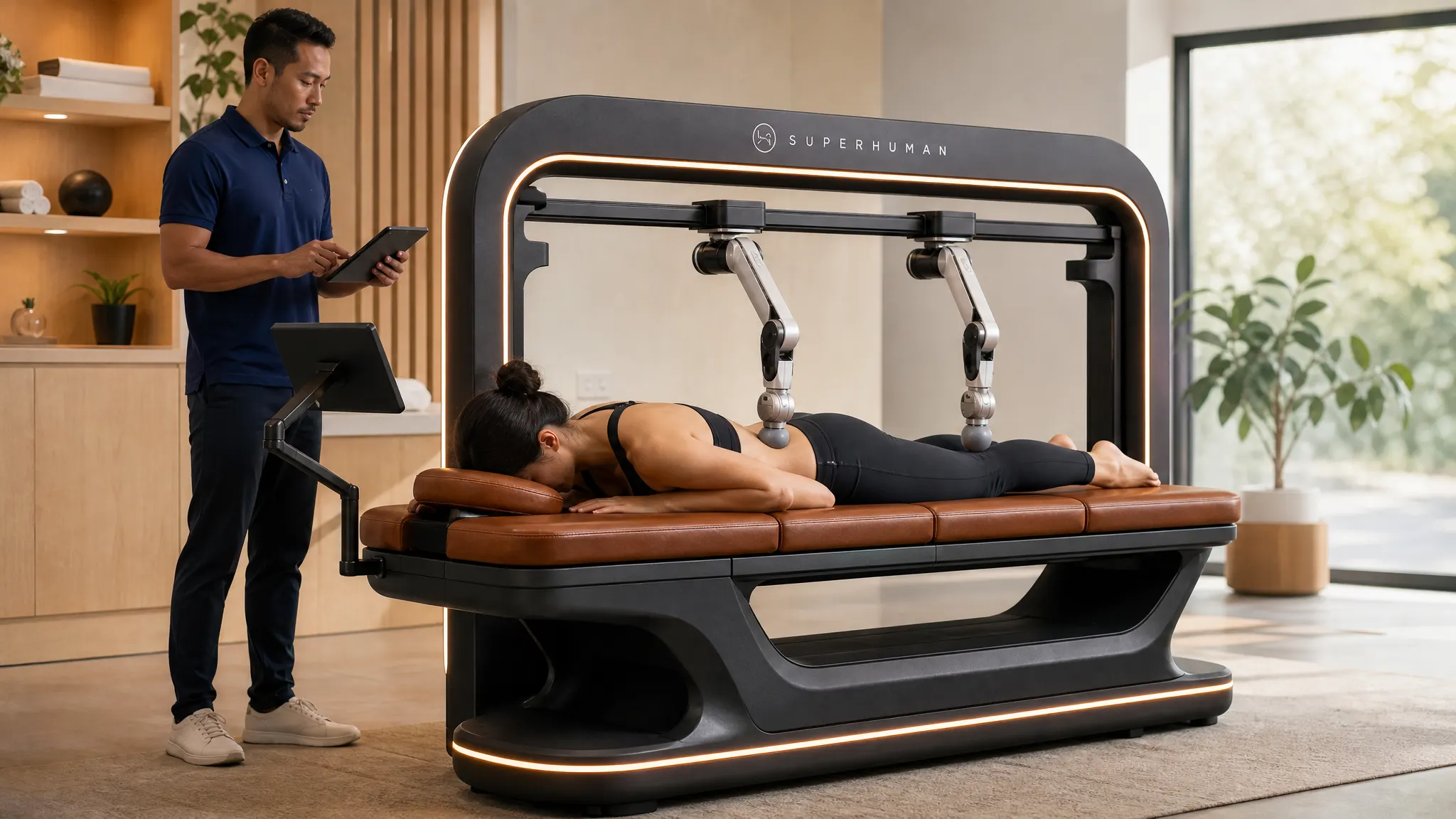
A physical therapy or chiropractic clinic can use a massage robot as a wellness adjunct to clinician-led care. Patients get a consistent, clothed relaxation massage before or after their visit, while clinicians keep full control of assessment and treatment. The Superhuman Touch T1 is a wellness device, not a medical device, and costs $64,900 or about $1,350 a month on financing.
What a massage robot is, and is not, in a clinic
Be precise with patients and staff about what the robot does.
It is:
- A padded table with two robotic arms that deliver a programmable massage to the back, shoulders, neck, glutes and legs.
- A consistent session, fitted to the patient by a 3D body scan, with pressure set by the patient.
- A wellness service your clinic can offer as a cash-pay add-on.
It is not:
- A treatment for any condition. We make no medical claims, and the T1 is not FDA cleared.
- A replacement for manual therapy, assessment or a treatment plan.
- A way to see more patients per clinician.
The safest way to describe it to patients is simple: “a relaxation massage you can add before or after your appointment”.
How it fits clinician-led care
Clinicians decide whether the robot is appropriate for each patient, and when. Some patterns clinics use:
- Before a session. A short, gentle massage while the patient waits, so the visit starts with the patient settled.
- After a session. A relaxation add-on on the way out.
- Between plans of care. A wellness option for discharged patients who want to keep coming in.
- For staff. Some clinics also let their own team use it after long days.
The robot never decides what is right for a patient. Your clinicians do. If a patient has a condition the clinician wants to address, that work stays hands-on.
For a balanced look at what robots and people each do well, see massage robot vs massage therapist.
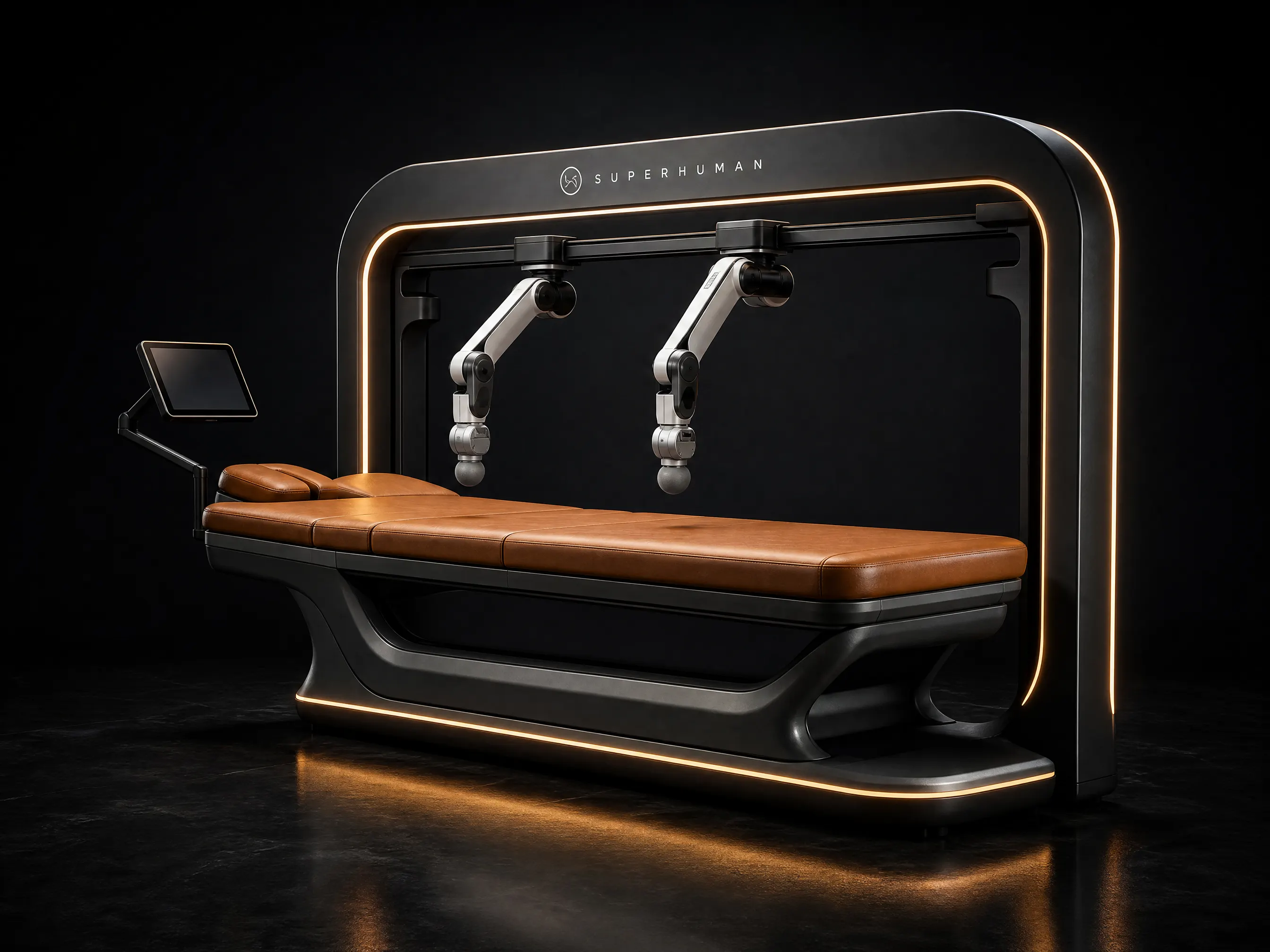
Superhuman Touch T1
A full-body massage that never calls in sick.
- Arms
- 2 robotic arms
- Session
- 30–60 min
- Guest
- Stays clothed
- Power
- 120/240 V · 20 A
Patient screening
Screen every patient before their first robot session and again when their health changes. Use your existing intake process and add a few direct questions. Common reasons to hold off or get clearance first include:
- Recent surgery, fractures or acute injuries in the area to be massaged.
- A history of blood clots, or taking blood thinners.
- Open wounds, burns, rashes or skin infections.
- Severe osteoporosis or other bone conditions.
- Pregnancy.
- Implanted devices, or any condition a clinician believes makes massage unsuitable.
When in doubt, patients should consult their physician before using the robot. Our massage robot safety guide includes a fuller checklist and links to reputable sources.
Workflow in a busy clinic
A simple workflow keeps the robot from adding work for clinicians:
- Clinician approves. The clinician flags the patient as cleared for robot sessions in the chart.
- Front desk books. The session goes in the schedule like any other room booking.
- Staff start the session. The patient lies down in fitted athletic wear, the robot runs a body scan, and staff confirm the routine and the pressure range.
- Patient controls. The patient adjusts pressure on a touchscreen and has a stop button within reach.
- Staff on call. No therapist is needed in the room, but someone should be nearby.
- Clean and log. Wipe down contact surfaces and log the session.
Plan on about one patient per hour including changeover. The T1 needs a private room of about 3.0 x 2.6 m, a dedicated 120 V or 240 V circuit on a 20 A breaker, and Wi-Fi or Ethernet.
Documentation
Good records protect the patient and the clinic. Keep them simple:
- Clearance. Who approved the patient for robot sessions and when.
- Consent. A short signed form that explains the service is wellness, not treatment, and lists the screening questions.
- Session log. Date, length, routine and any comments or issues.
- Incidents. Any time a session stops early, and why.
- Cleaning log. Time and initials for each wipe-down.
Talk to your insurance broker before you start. Confirm your general and professional liability cover includes a wellness device on site. More on this in the safety guide.
Pricing for a clinic
Most clinics price robot sessions as a cash-pay add-on, separate from any billed care. Keep the price simple and visible.
| Option | Example | Notes |
|---|---|---|
| Single add-on | $30 to $45 for 30 minutes | Easy to offer at check-out |
| Pack | 5 sessions at a small discount | Good for patients near discharge |
| Wellness membership | Monthly fee with set sessions | Keeps discharged patients connected |
These are illustrative ranges, not recommendations. Check them against your market and your billing rules.
Illustrative economics
A clinic open 10 hours a day, 22 days a month, at $40 per 30-minute session:
| Line | Low use | Steady use |
|---|---|---|
| Sessions per day | 3 | 6 |
| Sessions per month | 66 | 132 |
| Revenue at $40 | $2,640 | $5,280 |
| Financing (60 mo, OAC) | -$1,350 | -$1,350 |
| Electricity and supplies (estimate) | -$100 | -$180 |
| Monthly contribution before staff time and tax | $1,190 | $3,750 |
Clinics have shorter hours than gyms or hotels, so returns are smaller. See massage robot cost for the full picture.
Next steps
Read the T1 product page for specs and what is included, or contact us for a written quote with compliance documentation.