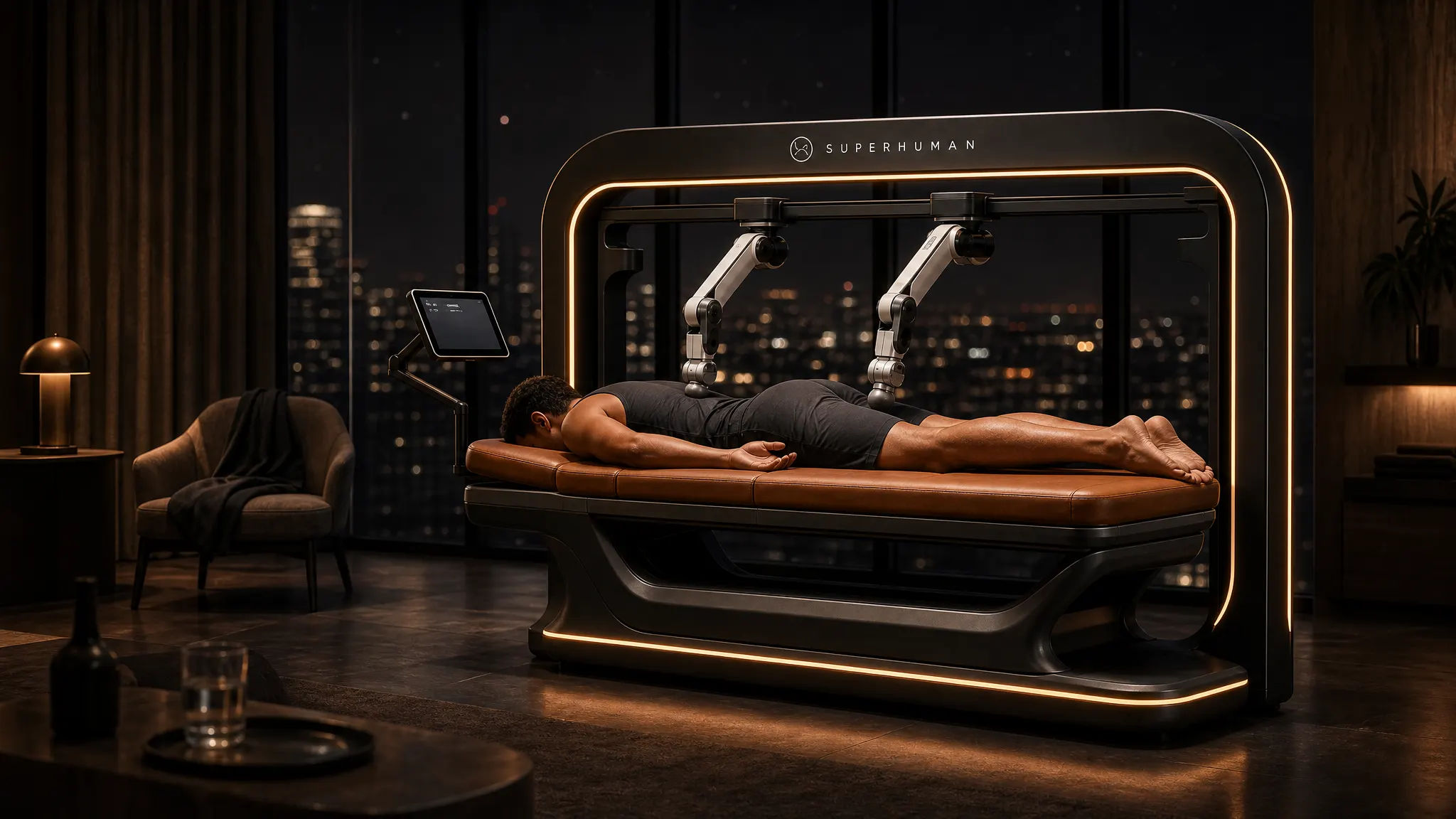
A massage robot gives a hotel a wellness amenity guests can book at any hour, without staffing a therapist for every shift. Guests stay clothed, set their own pressure and get a 30 to 60 minute massage that can go straight to the room bill. The Superhuman Touch T1 costs $64,900, or about $1,350 a month on financing, and the hotel owns it.
Why hotels are a natural fit
Hotel guests keep irregular hours. A business traveler lands at 10 p.m. after a long flight. A conference guest has 40 minutes free at 7 a.m. A family on vacation wants something for one parent while the other takes the kids to the pool.
Most hotel spas close in the evening and need appointments booked in advance. Many smaller hotels have no spa at all. The guests who want a massage most often ask for it when no therapist is working.
A robot changes that. It can take a booking every hour the room is open, including nights, early mornings and peak check-in days.
A 24/7 wellness amenity
Running the robot around the clock is possible, but it is an operating choice, not a default. Think through:
- Check-in. Who confirms the booking and starts the session? Front desk, concierge or a spa attendant?
- Access. A key-card lock on the robot room keeps it safe and private.
- On-call cover. Someone on site should be able to reach the room within a few minutes during a session.
- Cleaning. A short wipe-down routine between guests, with a log.
Many hotels start with extended hours, such as 6 a.m. to 11 p.m., then add overnight slots if demand is there. Plan on about one guest per hour including changeover.
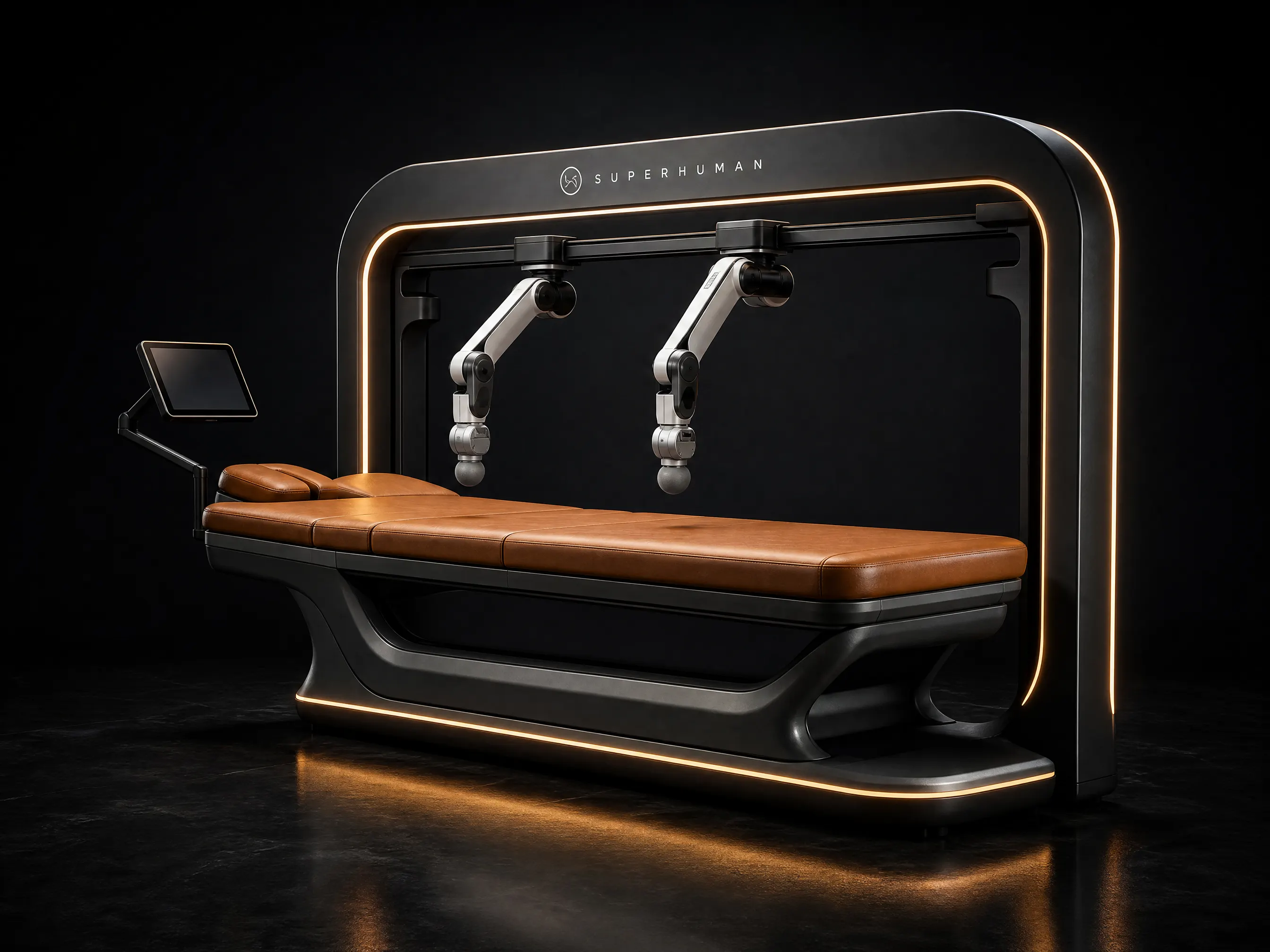
Superhuman Touch T1
A full-body massage that never calls in sick.
- Arms
- 2 robotic arms
- Session
- 30–60 min
- Guest
- Stays clothed
- Power
- 120/240 V · 20 A
Pricing and room-charge options
Hotels have more pricing tools than gyms or spas. Use them.
| Option | How it works | Why it works |
|---|---|---|
| Room charge per session | Guest books, the session posts to the folio | Easy for guests, no card at the door |
| Package add-on | Bundled into a “rest and recover” or late-arrival rate | Lifts average rate without a separate sale |
| Suite or club inclusion | One session per stay included for top room types | Gives premium rooms a clear, visible benefit |
| Day pass | Non-guests book a session at a set price | Adds local revenue in quiet periods |
Robot massage at locations elsewhere in the market is often priced at $60 or more per session. Hotel guests generally accept amenity pricing, so a 30-minute session around $60 to $75 and a 60-minute session around $90 to $110 is a reasonable range to test. Treat these as starting points.
Placement: spa, fitness center or suite
In the spa. The easiest fit. Spa staff already handle bookings, check-in and screening. The robot covers hours when therapists are off or fully booked. See our guide for spas.
Near the fitness center. Good for business hotels without a full spa. Guests finish a workout and walk next door.
A dedicated wellness room. A converted meeting room or office close to the lobby can work well, as long as it is private and quiet.
In a suite. Some resorts consider placing a robot in a top suite. It is possible, but the room still needs a dedicated 20 A circuit and space of about 3.0 x 2.6 m, and you lose the ability to sell the robot to other guests. A shared wellness room usually earns more.
Whichever you choose, the T1 needs:
- A footprint of 2.4 x 1.6 m in a room of about 3.0 x 2.6 m.
- A dedicated 120 V or 240 V circuit on a 20 A breaker.
- Wi-Fi or Ethernet for updates, booking and remote support.
The guest experience
The details decide whether guests come back for a second session.
- Booking. Through the hotel app, the front desk or a QR code in the room.
- Arrival. The guest arrives in athletic wear, or picks up a clean, fitted set from the attendant.
- Short screening. A few standard health questions on a tablet or card. Guests with health conditions are advised to check with their physician first.
- Session. The guest lies down, the robot runs a 3D body scan, and the session starts. The guest controls pressure on a touchscreen and has a stop button within reach.
- After. Water, a quiet moment, and the charge posts to the room.
Keep the room dim, warm and quiet. Offer slippers and a robe hook. These small touches matter more than the machine itself. Our safety guide covers screening and cleaning in more detail.
Illustrative economics
Assume a 200-room hotel with the robot open 17 hours a day and an average price of $70 per session posted to the room.
| Line | Low uptake | Strong uptake |
|---|---|---|
| Sessions per day | 3 | 6 |
| Sessions per month (30 days) | 90 | 180 |
| Revenue at $70 | $6,300 | $12,600 |
| Financing (60 mo, OAC) | -$1,350 | -$1,350 |
| Electricity | -$40 | -$80 |
| Linens, garments, supplies (estimate) | -$250 | -$500 |
| Monthly contribution before staff time and tax | $4,660 | $10,670 |
Suite inclusions and packages do not show as separate revenue, but they can support a higher room rate. For full purchase, financing and running costs, read massage robot cost.
What is included
Every T1 comes with delivery and positioning, installation, calibration and commissioning, one day of staff training, a 2-year parts and labour warranty, and remote monitoring with software updates. Electrical listing and safety documentation come with your written quote. See service and warranty for details.
Next steps
Review the full T1 product page, compare financing, or contact us to plan placement and get a written quote.